MOTHER-CHILD PAIRS PROGRAM FOR ELIMINATING CERVICAL CANCER
Cervical cancer is the second most prevalent type of cancer among females in India [1] and is the number 1 cancer killer in women. It accounts for 10% of all female cancers out of 1.4 million cases in 2020 [2] with a mortality rate of 51.6% [3]. Fortunately, cervical cancer is preventable, and the World Health Organization (WHO) has set an ambitious goal to eliminate it within this century [4]. In resource-limited settings, screen-and-treat approaches have been found to be most effective at addressing cancer-risk in a single visit [5]. The National Family Health Survey (2019-21) shows that only 1.9% of women aged 30-49 have been screened for cervical cancer [6].
Dr. Leela Digumarti designed this flagship project in 2015 as a solution towards elimination of cervical cancer, the major cause of cancer mortality in rural women in India. Under this program, every child and its mother is considered as one unit. Our motto is to screen the mother for cervical cancer with HPV testing, while vaccinating the child against HPV, the human papilloma virus, that causes cervical cancer.
This is in consonance with the WHO’s 3 pronged plan call for global elimination of cervical cancer (prevent-screen-treat). Our program follows the WHO Global targets of 90-70-90 (90% screened – 70% vaccinated – 90% treated) for cervical cancer elimination and aligns with the ambitious cancer screening and vaccination program chalked out by the Ministry of Health and Family Welfare, Government of India.
Modus operandi
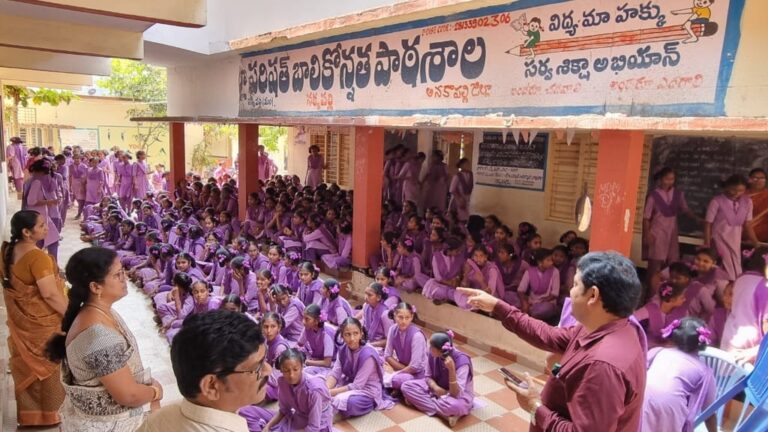
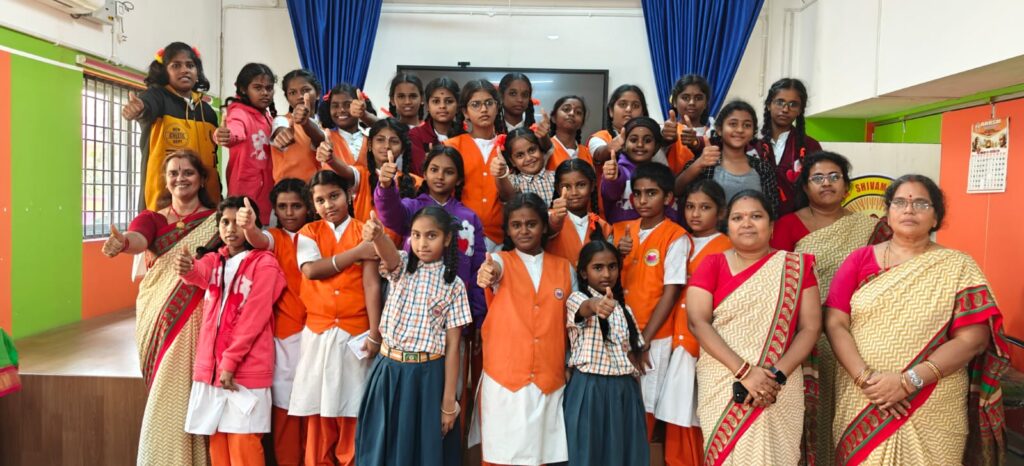
With the help of volunteers from several NGOs, village schools are identified and adopted. An awareness program is held involving the school teachers, staff, parents of children and every child who has completed 9 years of age. In simple language, details are provided on the human papilloma virus, the cancers caused by the virus in both men and women, the availability of Indian brand of vaccine and the need for screening of women for women beyond 35 years of age.
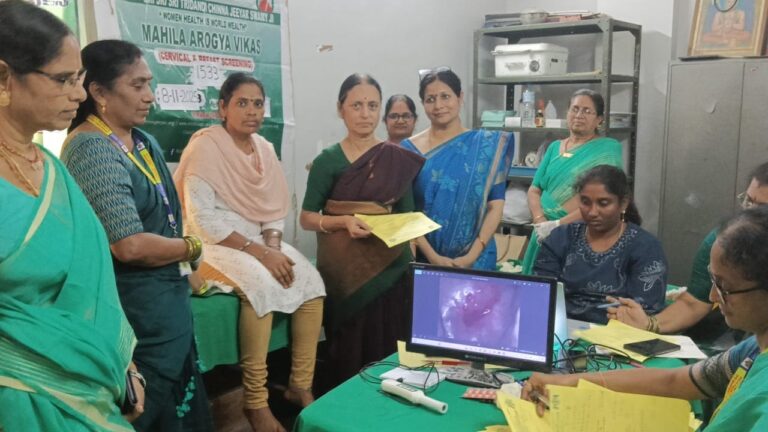
Every mother and her child/children from the village school who consents for screening and vaccination is enlisted on a digital platform. Using the DoB of the child, the number of doses of vaccine is calculated – 2 doses for children 9 through 14 years and 3 doses for older children. Cervical cancer screening is undertaken using HPV DNA testing on a Cobas platform. This is the recommended screening test as per WHO guidelines. A women with a negative screening test can be recalled after 5 years.
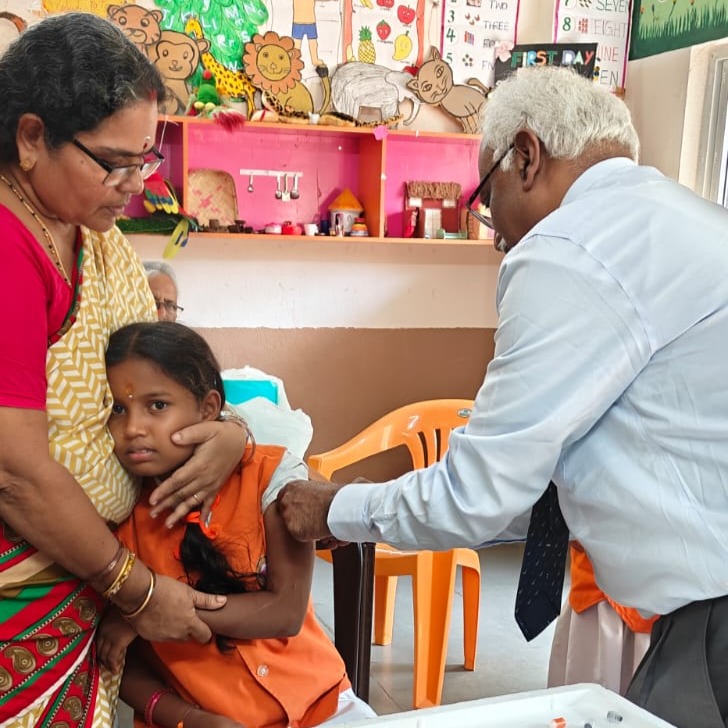
Since 2019, the Foundation has successfully raised funds to screen women and vaccinate children in 8 rural areas: Appapuram in Srikakulam District, Uddanapuram, Vempadu and Pedaramabhadrapuram in East Godavari District and Dharnarayudupeta in Visakhapatnam. Children and their mothers from the Zilla Parishad School in Aganampudi, Visakha Vimala Vidyalaya in Gantyada and and the Perla Rammurthy Chetty School for the Deaf and
Mentally Handicapped, Vizianagaram have also been screened and vaccinated.
As a pilot project, we also screened 65 women living with HIV/AIDS (WLWH) at the ART Centres, as these women have a very high incidence of HPV infections as well as cervical cancer.
Utility of the Program
It is now known that HPV causes 6 cancers – cervical, vulval and vaginal cancers in women, penile and anal cancers in men and oropharyngeal cancers in both men and women. New-born infants delivered by HPV positive women are at a high risk of developing a highly fatal condition called respiratory papillomatosis. Both men and women also develop anogenital papillomatosis. The HPV vaccine prevents all 6 cancers and the 2 benign conditions.
The cervical swabs are screened for HPV using the RT PCR technique. Women who are HPV positive undergo colposcopy and a locally ablative procedure to remove the abnormal tissue. The Digumarti Foundation sponsors HPV vaccination, cervical cancer screening, HPV testing, follow up and treatment, in association with collaborating charities. The foundation purchases vaccines from the open market using funds provided by donors. The entire program is free. Our efforts are to strengthen and supplement the hands of the State Government.
Our collaborators in these programs are: Maanavseva, N V Lakshmi Foundation, ECK Foundation, Arogya Mahila Viskas Tarangini, Sri Srinivasa Charitable Trust, ECOCARB and Rotary Club.
The cost of screening and vaccination for each class of 80 students is about ₹ 10.5 lakhs. Typical cost of providing the care for effective cervical cancer prevention per village is about ₹ 27-30 lakhs.
[1] Rath G.K. et al., Report of National Cancer Registry Programme (2012-2016), ICMR, (2020).
[2] Mathur P. et al. “Cancer statistics, 2020: report from national cancer registry programme, India.” JCO global oncology 6 (2020).
[3] Sathishkumar, K, et al., The Lancet Regional Health-Southeast Asia 24 (2024).
[4] WHO. Accelerating the elimination of cervical cancer as a global public health problem (2019).
[5] Banerjee, D. et al. “Screening technologies for cervical cancer: Overview.” Cytojournal 19 (2022).
[6] Government of India, NFHS 2019-21.